
Ed Martin Nissan of Fishers

2026 Nissan Altima vs Toyota Camry: The Gas-Price vs Hybrid-MPG Decision for Central Indiana

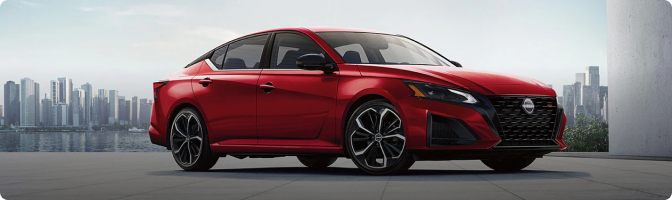
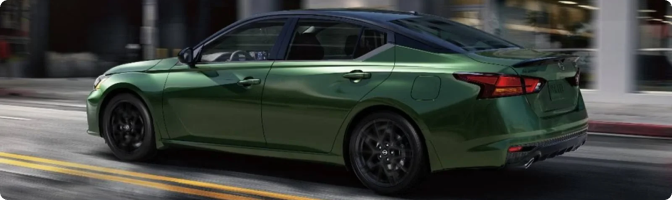
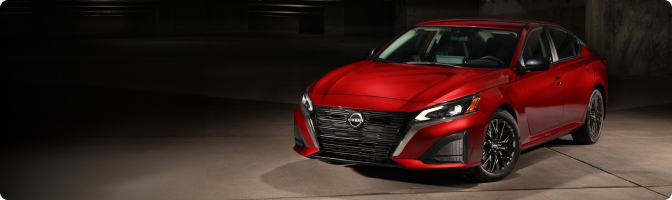
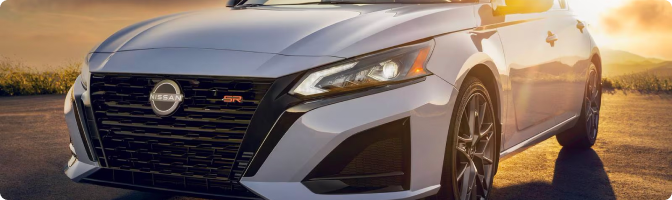
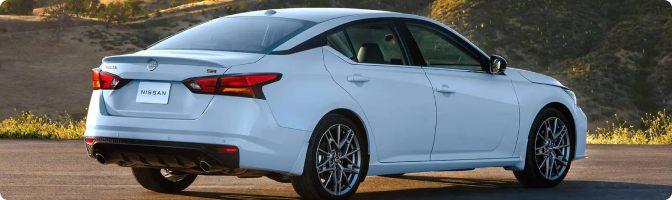
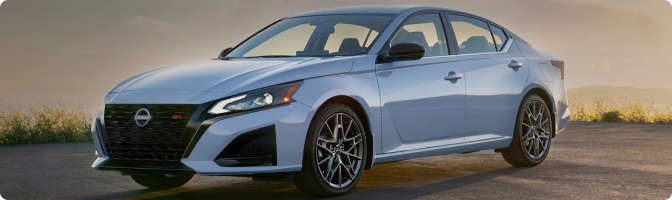
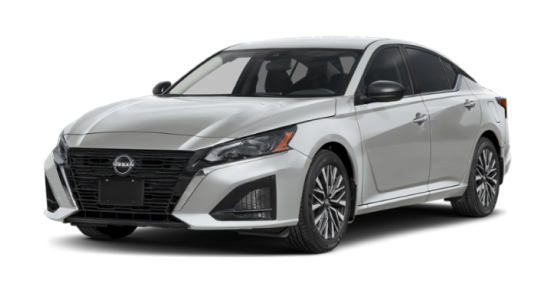
If your shortlist has come down to the 2026 Nissan Altima and the 2026 Toyota Camry, the split comes down to price and powertrain. The Altima starts lower, at $27,580 at launch (2026 model year), excluding destination, runs on regular gas, and is the only one of the two you can still buy without a hybrid. The Camry is hybrid-only now, and that is its strength: it returns up to 51 mpg combined and carries the stronger crash result of the pair, though both earn NHTSA's top 5-star overall rating.

2026 Nissan Altima vs Toyota Camry

So the choice is simple. Go with the Altima to spend less up front and keep things familiar. Go with the Camry to spend less at the pump over the years you own it. Both are good cars, and we are happy to put you in either one.

  • Key Facts
  • At a Glance
  • How We Frame the Camry
  • Price
  • Powertrain
  • Fuel Economy
  • Space and Practicality
  • Technology
  • Safety
  • Warranty
  • Choose Yours
  • Where the Altima Wins
  • Where the Camry Wins
  • Our Take

  • FAQ

Key Facts

Here is the fastest way to read this matchup. The Altima wins on entry price and gas simplicity, the Camry wins on fuel economy and crashworthiness, and both can be had with all-wheel drive, which is what most of our Hamilton County families ask for first.

  • Entry price at launch: Altima SV at $27,580, about $1,720 under the Camry LE at $29,300, both at launch (2026 model year), excluding destination.
  • Powertrain: Altima runs a 2.5L gas engine on regular fuel. The Camry is a 2.5L hybrid, with no non-hybrid version offered.
  • Fuel economy: Altima up to 30 mpg combined (front-wheel drive). Camry up to 51 mpg combined (front-wheel drive LE).
  • All-wheel drive: available on both, which matters for a Central Indiana winter.
  • Safety: both earn a 5-star overall NHTSA rating; every Altima includes Nissan Safety Shield 360 standard, while the Camry holds the stronger IIHS crashworthiness result.
  • The one caveat: if every dollar of long-term fuel cost is your priority, the hybrid Camry is built for that. If a lower sticker and a familiar gas engine matter more, the Altima is the value play. There is no wrong answer here, just the one that fits how you drive.

At a Glance

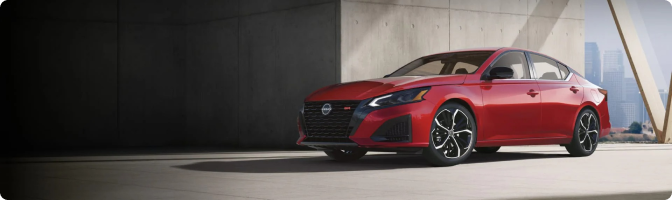
The two sedans separate cleanly along cost and efficiency, and the final row names who we think each one is built for.

Feature 2026 Nissan Altima 2026 Toyota Camry
Starting MSRP at launch $27,580 $29,300
Powertrain 2.5L gas, regular fuel 2.5L hybrid, regular fuel
Horsepower (front-wheel drive) 188 hp 225 hp (hybrid net)
EPA combined (front-wheel drive) up to 30 mpg up to 51 mpg
Drive options Front-wheel or all-wheel drive Front-wheel or all-wheel drive
Seating 5 5
Cargo volume 15.4 cu ft 15.1 cu ft
NHTSA overall rating 5 stars 5 stars
Best-fit buyer The driver who wants the lower price and a regular-gas engine, with all-wheel drive available The driver who wants the highest mpg and the stronger IIHS crash result, and is fine going hybrid-only

MSRP at launch (2026 model year), excluding destination. Current pricing varies by configuration and program.

How We Frame the Camry

Shoppers who put the Altima on their list almost always put the Camry on it too, because the Camry is the default hybrid midsize sedan, and it is the car most cross-shoppers weigh against ours. That is the fair way to read this comparison: one car asks you to commit to a hybrid for class-leading mpg, and the other lets you keep a gas engine and a lower price. Neither choice is wrong. The rest of this page lays the two side by side, dimension by dimension, so you can see exactly where each one earns its keep before you ever set foot on the lot.

Price

The short version: the Altima is the lower-cost entry into the segment and stays cheaper trim for trim. Its lineup is shorter, which keeps the decision simple, while the Camry climbs higher because every grade carries the hybrid system.

Price point 2026 Nissan Altima 2026 Toyota Camry
Lowest front-wheel drive $27,580 (SV) $29,300 (LE)
Top front-wheel drive $28,980 (SR) $35,700 (XSE)
Lowest all-wheel drive $29,080 (SV AWD) $30,825 (LE AWD)
Top all-wheel drive $30,480 (SR AWD) $37,225 (XSE AWD)

MSRP at launch (2026 model year), excluding destination. Current pricing varies by configuration and program.

The Altima keeps it simple with two grades, SV and SR. The Camry runs a longer ladder of LE, SE, Nightshade, XLE, and XSE, each available in front-wheel or all-wheel drive. If your budget tops out near $30,000, that shorter Altima ladder works in your favor: the same money gets you a fully equipped SR or an all-wheel-drive SV, either way near the top of the lineup. The Camry at $29,300 is still at its entry LE grade, and all-wheel drive does not arrive until $30,825.

So if you are a Fishers buyer who wants all-wheel drive without crossing $30,000, the Altima SV AWD at $29,080 is the more direct path, and we see a lot of our north-metro families land right there. To see where your budget really lands, get a real number for your current car with our value your trade tool before you shop.

Powertrain

Here is the heart of it: the Altima keeps a conventional gas engine, and the Camry commits fully to hybrid power. That single difference drives most of the price and fuel-economy gap between them.

Spec 2026 Nissan Altima 2026 Toyota Camry
Engine 2.5L 4-cylinder gas 2.5L 4-cylinder hybrid
Fuel Regular Regular
Horsepower, front-wheel drive 188 hp 225 hp (hybrid net)
Horsepower, all-wheel drive 182 hp 232 hp (hybrid net)
Transmission Continuously variable Electronic continuously variable
Drive Front-wheel or all-wheel drive Front-wheel or all-wheel drive

On paper the Camry makes more power: 225 hp in front-wheel drive and 232 hp with all-wheel drive, against the Altima's 188 hp and 182 hp. The Altima's gas engine produces 180 lb-ft of torque in front-wheel drive. One note worth knowing if you are weighing all-wheel drive: adding AWD costs the Altima a small amount of power (188 hp in front-wheel drive, 182 in AWD), while the Camry's AWD actually gains it (225 in front-wheel drive, 232 in AWD). Both have plenty for a Central Indiana winter commute, so do not let that worry you; the direction of the change is just different.

The broader trade is straightforward: the Camry's hybrid setup delivers more output and far better mpg, and you pay for it up front. The Altima keeps a simpler, lower-cost gas drivetrain, and plenty of our Fishers buyers still prefer that, both for the familiarity and for the lower price to get in the door.

Fuel Economy

The Camry wins fuel economy outright, and it is the clearest reason to choose it. The Altima is competitive for a gas sedan, but a hybrid is simply a different category of efficiency.

Configuration 2026 Nissan Altima 2026 Toyota Camry
Front-wheel drive (city/hwy/combined) 26/36/30 up to 52/49/51 (LE)
All-wheel drive (city/hwy/combined) 25/33/28 up to 50/49/50 (LE)

The Camry's figures vary by grade: the LE is the most efficient, while sportier grades come in lower, at 47/45/46 in front-wheel drive and 43/43/43 for the all-wheel-drive XSE. Even at the bottom of its range, the Camry comfortably out-sips the Altima. If you log highway miles between Fishers and Indianapolis, or you take longer weekend runs, that advantage shows up at every fill-up. It is real money saved over time, and it is the math the Camry is built to win.

Space and Practicality

These two are close in size, and the Altima holds a small edge in a few practical numbers. Both seat five, and both share a 111.2-inch wheelbase.

Measure 2026 Nissan Altima 2026 Toyota Camry
Length 192.9 in 193.5 in
Width 72.9 in 72.4 in
Height 56.8 in 56.9 in
Cargo volume 15.4 cu ft 15.1 cu ft
Front head room 39.1 in 38.3 in
Front leg room 43.8 in 42.1 in
Fuel tank 16.19 gal 13 gal
Seating 5 5

The Altima carries slightly more trunk space and a bit more front head and leg room, the kind of difference a taller driver notices on a regular Hamilton County commute. Its larger gas tank also means a longer reach between fill-ups, even though the Camry uses far less fuel per mile. Do not read too much into the Camry's smaller 13-gallon tank, though: it is sized for the hybrid's efficiency, and it uses fuel slowly enough that a smaller tank still covers long runs. These are genuine but small margins, and they do not decide the comparison on their own. But if you are a taller front-seat driver, or a family that packs the trunk for a weekend trip, they tip toward the Altima.

Technology

The Altima's tech content is clearly defined by grade, so it is easy to know what you are getting. The Camry runs a comparable multimedia setup that scales by grade as well, and our team at the Fishers showroom is glad to walk through the Camry side grade by grade on the specific build you are considering.

Tech dimension 2026 Nissan Altima 2026 Toyota Camry
Entry-grade screen and connectivity 8-in touchscreen, Apple CarPlay and Android Auto, remote engine start Grade-based; confirm details at our showroom
Upper-grade screen and connectivity 12.3-in touchscreen, wireless Apple CarPlay and Android Auto, wireless charger Grade-based; confirm details at our showroom
Wheels 17-in alloy (SV) / 19-in (SR) Grade-based

The Altima SV-to-SR step is where most of the Nissan tech decision lives:

Feature Altima SV Altima SR
Touchscreen 8-inch 12.3-inch
Apple CarPlay and Android Auto Wired Wireless
Wireless charging Not included Included
Other Remote engine start, 17-inch alloy wheels 19-inch wheels, paddle shifters, sport-tuned suspension

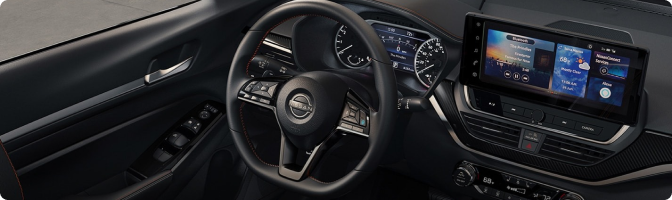
Stepping from the Altima SV to the SR brings the larger 12.3-inch screen, wireless smartphone connection, and a wireless charger, so that one grade choice settles most of the Altima's tech story. And if lining the Camry's multimedia up grade by grade matters to your decision, just say the word and we will set up a side-by-side walk-through at our showroom on the exact configuration you are considering.

Safety

Start with the good news that covers both: each sedan earns a 5-star overall rating from NHTSA, so neither is a step down on the headline federal score. From there, each car leads in a different way: the Altima makes its full Safety Shield 360 suite standard on every grade, and the Camry turns in the stronger scores on the independent IIHS crash tests.

Safety measure 2026 Nissan Altima 2026 Toyota Camry
NHTSA overall rating 5 stars 5 stars
Standard driver-assistance Nissan Safety Shield 360 on every grade Standard front crash prevention
IIHS small-overlap front Good Good
IIHS moderate-overlap front Marginal Good
IIHS side Poor Good
IIHS headlights Acceptable Acceptable

Where the Altima leads is standard coverage: Nissan Safety Shield 360 comes standard on every grade, right down to the entry SV, so every Altima buyer gets that full driver-assistance suite without climbing to a higher trim, alongside the top federal 5-star rating. You can read what each of those features actually does on our Nissan safety and technology overview.

On the independent IIHS crash tests, the Camry is the stronger performer: it earns Good across the moderate-overlap and side evaluations where the Altima earns Marginal and Poor (both are Good in the small-overlap front test, and both take Acceptable headlights). If independent crash-test results sit at the top of your list, that is a genuine point for the Camry, and we lay it out in the strengths boxes below. Every crash rating on this page, for the Altima and the Camry alike, reflects the NHTSA and IIHS scores published as of this writing in 2026, and both agencies revise their ratings over time, so confirm the current scores for both cars at NHTSA.gov and IIHS.org on the exact grade you are considering before you buy.

Warranty

Good to know up front: the two cars match on basic and powertrain coverage, and the Camry adds hybrid-specific protection that the gas Altima simply does not need.

Coverage 2026 Nissan Altima 2026 Toyota Camry
Basic 36 months / 36,000 miles 36 months / 36,000 miles
Powertrain 60 months / 60,000 miles 60 months / 60,000 miles
Corrosion 60 months 60 months
Hybrid system Not applicable (gas powertrain) 96 months / 100,000 miles
Hybrid battery Not applicable (gas powertrain) 120 months / 150,000 miles

The bumper-to-bumper and powertrain terms are the same on both. The Camry adds 96 months or 100,000 miles of hybrid-system coverage and 120 months or 150,000 miles on the hybrid battery, which is real long-term protection on the most complex part of the car. It also includes ToyotaCare scheduled maintenance for 2 years or 25,000 miles. If the big thing holding you back is nervousness about going hybrid, let those terms settle it: Toyota stands behind the system for a full decade.

The Altima's conventional gas powertrain does not need that coverage, so it does not carry it, and that is the trade in a nutshell. If long-term peace of mind is what you are really after and a new Altima stretches the budget, a Nissan Certified Pre-Owned Altima adds its own multi-year limited warranty on top of a used-car price.

Choose Yours

Choose the Nissan Altima if: you want the lower price, you would rather keep a familiar gas engine than commit to a hybrid, you value a little more trunk and front-seat room, and you still want all-wheel drive available for winter. The SV gets you in the door at $27,580 at launch (2026 model year), excluding destination, and the SR adds the 12.3-inch screen and wireless tech without crossing $29,000.

Choose the Toyota Camry if: fuel economy is the number that matters most to you, you want the stronger IIHS crash result, and you are comfortable going hybrid-only. The trade is a higher starting price and a longer climb up the trim ladder, paid back over time at the pump.

Where the Altima Wins

The Altima earns its lower price with concrete advantages of its own.

  • A lower price with no hybrid premium: the Altima SV starts at $27,580 at launch, about $1,720 under the Camry LE, and it gets there with a familiar regular-gas engine rather than a hybrid you pay extra for up front.
  • A cheaper way into all-wheel drive: the all-wheel-drive Altima SV lands at $29,080, while the Camry does not reach all-wheel drive until $30,825, so winter traction costs less to get into on the Nissan side.
  • Standard safety tech plus more room: every Altima carries Nissan Safety Shield 360 on every grade, and the Altima holds a bit more trunk space and more front leg room than the Camry, the kind of margin a taller driver or a packed weekend trunk notices.

If a lower sticker, a familiar gas engine, and value-priced all-wheel drive top your list, the Altima is the one to drive.

Where the Camry Wins

The Camry earns its higher price in three concrete ways.

  • Fuel economy: the Camry returns up to 51 mpg combined in front-wheel drive, far beyond the Altima's 30 mpg. Over years of Central Indiana driving, that is the Camry's single biggest advantage.
  • Crashworthiness: in IIHS testing the Camry posts Good results across the small-overlap, moderate-overlap, and side crashes, where the Altima does not match it. Both cars are NHTSA 5-star overall, but the Camry is the stronger performer on the independent crash tests.
  • Hybrid coverage and maintenance: the Camry adds long hybrid-system and hybrid-battery warranties and includes ToyotaCare scheduled maintenance for 2 years or 25,000 miles, ownership extras the gas Altima does not carry.

If those three points top your list, the Camry is the right call.

Our Take

We see both kinds of buyer at our Fishers showroom, and in our experience the decision usually settles itself in a back-to-back drive. Families across Fishers, Carmel, Westfield, and Noblesville who want all-wheel-drive confidence for a Geist-area winter without a hybrid premium tend to land on the Altima, especially the all-wheel-drive SV near $29,080 at launch (2026 model year), excluding destination. Commuters logging long highway miles toward Indianapolis lean Camry for the mpg. The surest way to know is to drive the Altima here and the Camry at a Toyota store, then let the seat, the screen, and the ride pick for you.

For current pricing and any incentives that move the math, to study trims and equipment, or to see what is on the ground right now, start here.

So here is the easy next step: come drive the Altima at our Fishers showroom. If the Camry is still on your list, drive one at a Toyota store before you decide, because the car that fits how you live is the right one to own. Low-pressure, and we will be glad to help whenever you are ready. You can find us with our Fishers showroom hours and directions.

FAQ

Which is cheaper, the 2026 Altima or the Camry?

The Altima. It starts at $27,580 for the SV at launch (2026 model year), excluding destination, about $1,720 below the Camry LE at $29,300. The Altima also stays lower trim for trim, since its lineup is shorter and every Camry grade includes the hybrid system.

Does the 2026 Altima come as a hybrid?

No. The Altima uses a 2.5L gas engine on regular fuel, which is part of why it costs less to start. The Camry is the hybrid in this matchup, and it is hybrid-only, so there is no non-hybrid Camry to compare against.

Can I get all-wheel drive on either sedan?

Yes, both offer all-wheel drive. The Altima is available with all-wheel drive on both the SV and SR, and the Camry offers it across its grades. All-wheel drive is worth a look if you want extra traction for a Central Indiana winter.

How much better is the Camry on gas mileage?

Meaningfully better. The Camry LE returns up to 51 mpg combined in front-wheel drive, while the Altima reaches up to 30 mpg combined. Even the sportier Camry grades, around 46 mpg, stay well ahead of the Altima. That efficiency is the Camry's main reason to exist.

Is the Altima safe even though it costs less?

Yes, you can set that worry aside. The Altima earns a 5-star overall rating from NHTSA, the same headline score as the Camry, and Nissan Safety Shield 360 is standard on every grade. The caveat is that the Camry posts stronger IIHS crashworthiness results, so if independent crash testing is your top priority, the Camry leads there.

Which one has more passenger and cargo room?

The Altima holds small edges in a few practical numbers: 15.4 cubic feet of trunk space against the Camry's 15.1, plus a bit more front head and leg room. Both seat five and share a 111.2-inch wheelbase, so the cabins feel close in size day to day.

Does the Altima use premium fuel?

No. The Altima runs on regular gas, and so does the Camry hybrid. Neither requires premium, which keeps day-to-day fuel costs predictable on both.

What is the difference between the Altima SV and SR?

The SV is the value grade, with an 8-inch touchscreen, wired Apple CarPlay and Android Auto, remote engine start, and 17-inch alloy wheels. The SR adds a 12.3-inch touchscreen with wireless smartphone connection and a wireless charger, plus 19-inch wheels, paddle shifters, and a sport-tuned suspension. That step decides most of the Altima's tech.

Which sedan is better for Central Indiana winters?

Either works, since both offer all-wheel drive for added traction on snow and ice. If you want winter confidence without going hybrid, the all-wheel-drive Altima SV is the lower-cost path. If you want all-wheel drive plus the best fuel economy, the all-wheel-drive Camry is the answer.

Should I verify the safety ratings before I buy?

Yes. NHTSA and IIHS update their ratings over time and test specific configurations, so confirm the current 5-star NHTSA result and the latest IIHS crashworthiness grades on the exact 2026 grade you are considering before you finalize a purchase.

Where can I compare both near Fishers?

You can drive the Altima at our Fishers showroom, and we would point you to a nearby Toyota store to drive the Camry, so the seat, screen, and ride make the call for you. Check our current Nissan offers for pricing that may shift the decision, and visit the Altima details page to study trims before you come in.